Le peuple swazi, également connu sous le nom de Siswati, partagent un lien culturel profond avec leurs pratiques traditionnelles, y compris leurs coutumes de mariage. Alors que “Swazi” fait référence aux gens et à leur identité culturelle plus large, “Siswati” est le terme utilisé pour désigner leur langue et leurs éléments culturels spécifiques. Cette distinction est importante car elle met en valeur la riche tapisserie culturelle tissée dans tous les aspects de la vie swazie., y compris leurs mariages.
Quand il s'agit de mariages, chaque culture a son style et ses traditions uniques, et les mariages swazis ne font pas exception. Le peuple swazi, connus pour leur culture dynamique et leurs traditions profondément enracinées, célébrer leur union avec des cérémonies aussi colorées que significatives. Des décorations complexes aux tenues de cérémonie, Le décor traditionnel swazi offre une riche tapisserie d'importance culturelle et d'expression artistique. Ce guide plonge au cœur de la décoration de mariage Siswati, offrant un aperçu des éléments qui rendent ces célébrations vraiment spectaculaires.
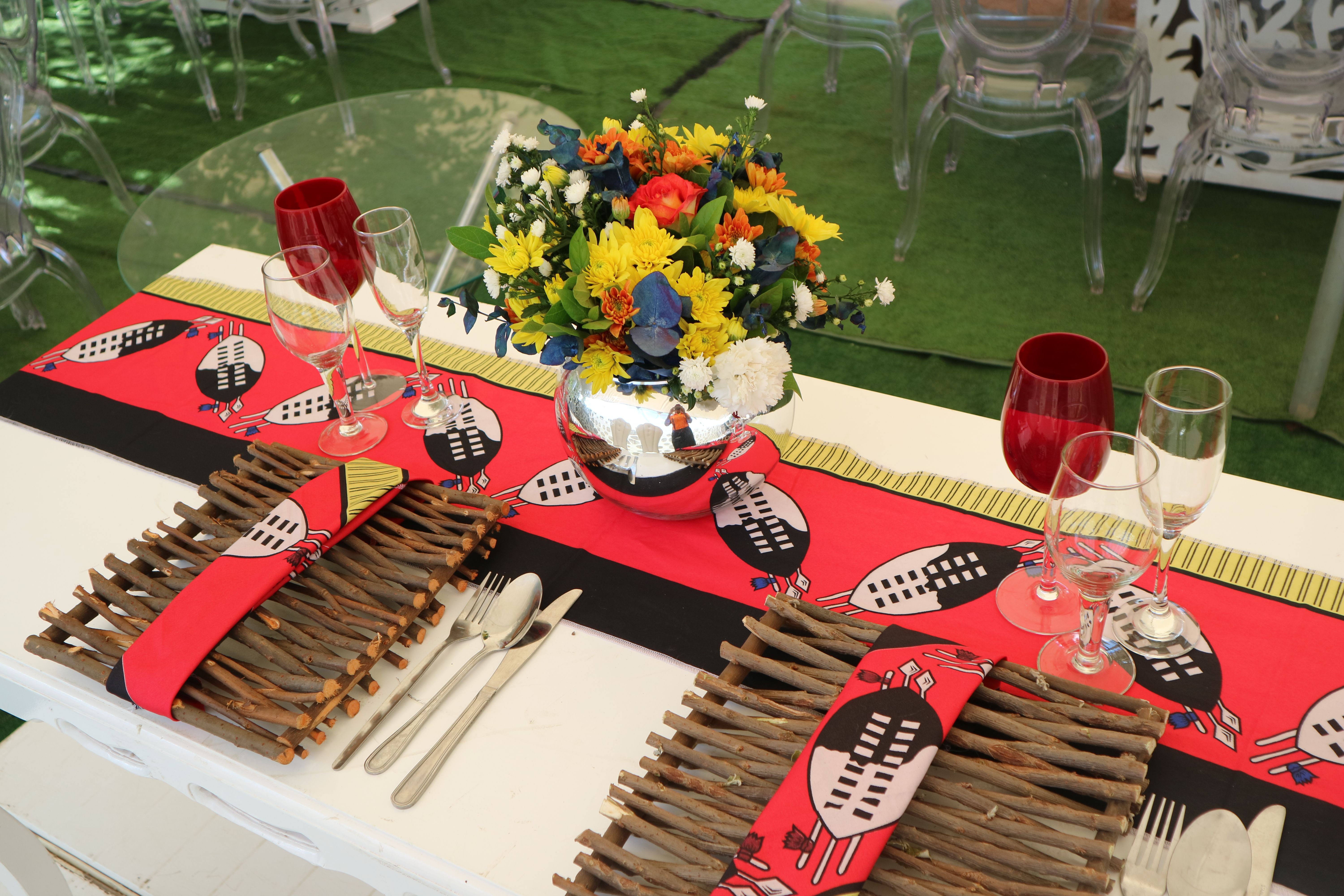
Comprendre la décoration de mariage traditionnelle swazie
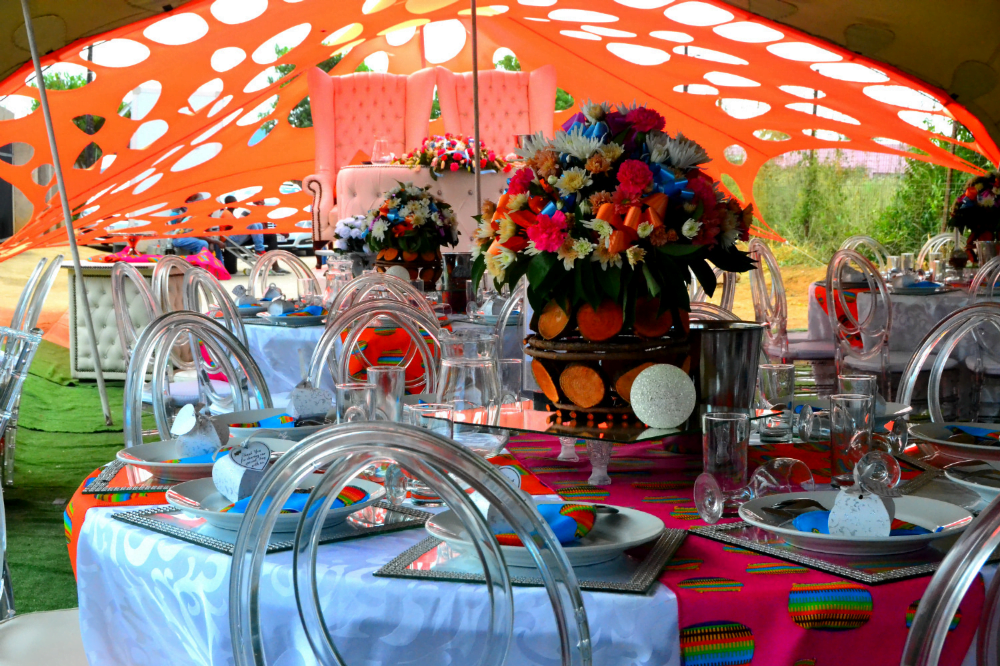
Le décor traditionnel Siswati dans les mariages est une toile vibrante qui dresse un tableau de l'héritage culturel du décor de mariage traditionnel sud-africain., avec chaque élément et chaque coup de pinceau portant sa signification culturelle spécifique.
L’une des premières choses que vous remarquerez est l’explosion de couleurs. La décoration swazie n'est pas seulement une question d'esthétique; c'est une célébration des valeurs culturelles. Des couleurs comme le rouge, bleu, et le vert ne sont pas choisis au hasard.
- Rouge symbolise la vitalité et la force du peuple swazi, souvent vu dans des vêtements et des décorations traditionnelles, reflétant à la fois la chaleur de la communauté et la ferveur de la célébration.
- Bleu, une couleur profondément liée au ciel swazi et aux terres fertiles, représente la prospérité et la promesse d'un avenir fructueux pour les jeunes mariés.
- Vert, évoquant les paysages luxuriants et les récoltes abondantes, signifie la croissance, renouvellement, et le nouveau départ du couple.
En plus, les motifs du décor swazi sont tout aussi captivants. Des techniques complexes de perlage et de tissage sont utilisées pour créer des designs élaborés qui incluent souvent des motifs comme le “lessive” (cultural motifs) et “Chez les soldats” (modèles symboliques). Ces conceptions sont imprégnées de couches de sens, symbolisant le lien entre le terrestre et le spirituel et reflétant les bénédictions ancestrales et la relation harmonieuse entre la nature et la vie humaine.
Décoration de mariage traditionnelle Siswati
Participer à un mariage traditionnel Siswati, c'est comme profiter d'une fête naturelle et sauvage. Pendant que vous vous déplacez dans la salle, vous êtes immergé dans une riche tapisserie de couleurs, motifs, et un savoir-faire qui met magnifiquement en valeur les traditions et le patrimoine du Swaziland. Voici comment ils expriment leurs idées, histoire, et du design dans tous les coins.
Configuration du site
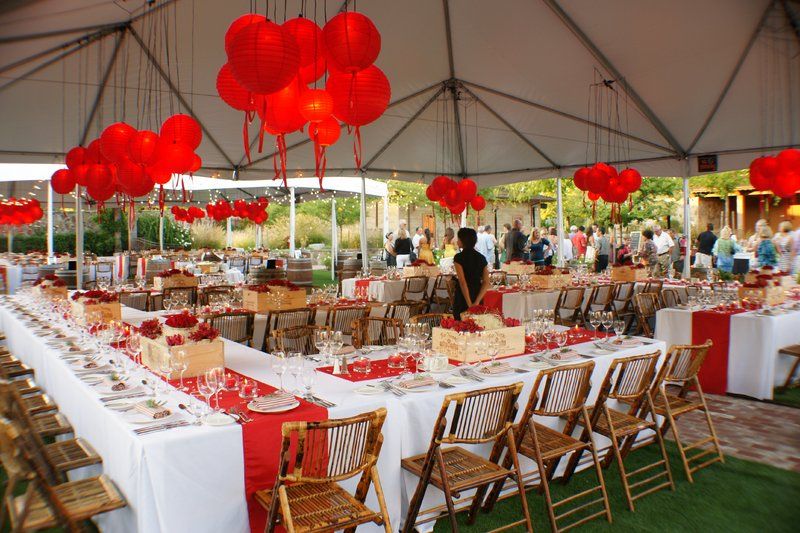
L'aménagement des lieux intérieurs et extérieurs à Swazi reflète les traditions dynamiques et le talent artistique du peuple swazi., préparer le terrain pour une célébration mémorable. Explorons comment ces décorations s'assemblent pour préparer le terrain pour cette occasion unique..
Indoor Décoration
Le décor traditionnel swazi pour le lieu de mariage où l'air est rempli d'une aura de grandeur et de chaleur. Le lieu présente souvent des tissus richement ornés, comme le coloré "Emahiya,» qui sont drapés sur les murs et les tables. Ces textiles traditionnels, généralement en rouge vif, bleus, et les verts, sont ornés de perles et de broderies complexes. Aussi, vous trouverez peut-être des nappes avec des bords perlés qui reflètent magnifiquement la lumière, ajoutant une touche d'élégance et de profondeur culturelle.
Les centres de table sur les tables comprennent souvent des objets artisanaux comme paniers tressés remplis de fleurs et de fruits locaux, comme le marula ou les orchidées sauvages. Ces centres de table sont censés symboliser la prospérité et l'abondance de la nature.. Des chemins de perles pourraient orner les tables, présentant des motifs complexes qui racontent des histoires sur le patrimoine et les croyances swazis.
L'éclairage joue un rôle crucial dans la création de l'ambiance. Lustres ou suspensions pourrait être orné de couvertures de perles traditionnelles, jetant un chaud, lueur invitante sur les décorations élaborées. L'éclairage tamisé met en valeur les riches couleurs et textures du décor., rendre l'espace à la fois intime et festif.
Outdoor Décoration
Sortez, et le décor du mariage swazi continue d'impressionner par son intégration de beauté naturelle et d'éléments traditionnels.. Tentes ou auvents, souvent décoré de couleurs vives, tissus à motifs, créer une ambiance festive. Ces tentes sont généralement drapées de tissus aux couleurs vives présentant des motifs géométriques traditionnels..
L'utilisation d'éléments naturels est prédominante dans la décoration extérieure. Vous pourriez voir guirlandes faites de fleurs fraîches locales comme des bougainvilliers ou des hibiscus, qui sont utilisés pour décorer les entrées et les auvents. Ces fleurs ajoutent non seulement une touche de couleur, mais ont également une signification culturelle., symbolisant la beauté et la fertilité.
Traditionnel « Peaux de bétail » peut être utilisé dans le cadre de la disposition des sièges ou comme élément décoratif, reflétant le lien profond du peuple swazi avec son bétail, qui est un symbole de richesse et de statut. L'utilisation de sculptures en bois et de nattes tissées améliore encore le cadre extérieur, se fondant parfaitement dans le paysage environnant et créant un espace harmonieux, charme rustique.
Pièces uniques
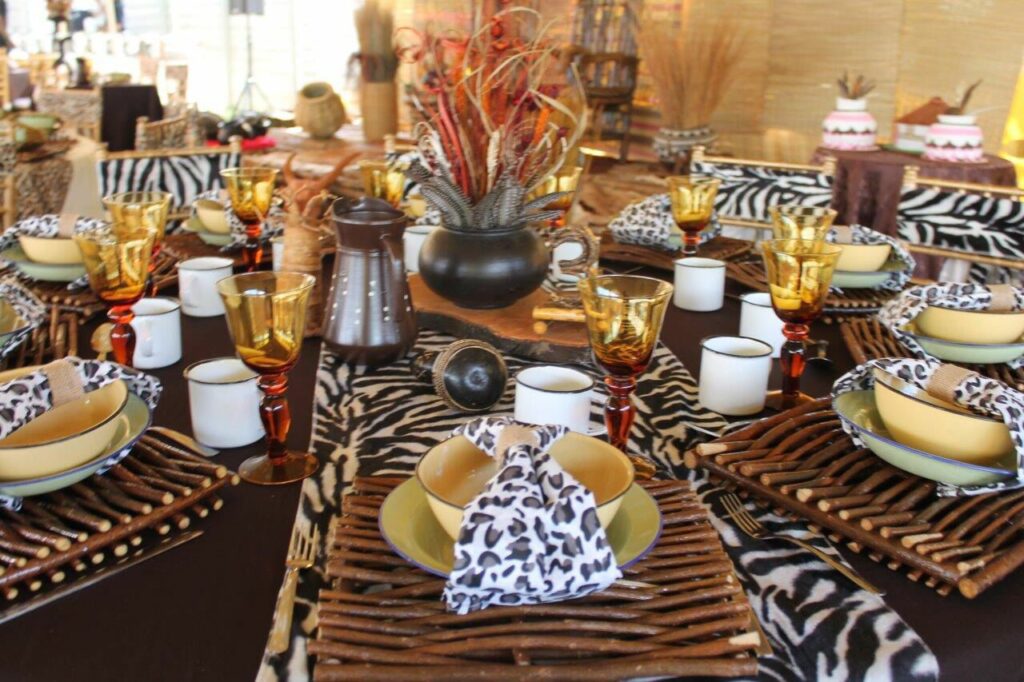
Au mariage local, les idées et pièces de décoration traditionnelles swazies uniques, comme les objets artisanaux et les bougies swazies, sont plus qu'une simple décoration : elles sont des expressions de l'art culturel et de la tradition..
Artisanat fait à la main
Le lieu du mariage présente souvent des objets artisanaux exquis qui mettent en valeur les compétences des artisans swazis.. Paniers tissés à la main, orné de perles colorées et de motifs complexes, servir à la fois d’éléments décoratifs et d’objets fonctionnels. Ces paniers peuvent être utilisés comme centres de table ou pour contenir des offrandes traditionnelles, reflétant l'importance culturelle de l'artisanat dans la vie swazie.
Les bijoux en perles sont un autre point fort, avec des motifs complexes symbolisant divers aspects du patrimoine swazi. Les mariés portent souvent colliers faits à la main, bracelets, et des boucles d'oreilles, méticuleusement conçu pour représenter l'unité, prospérité, et bénédictions ancestrales.
Bougies Swazi
Les bougies swazies ajoutent une lueur chaleureuse et invitante au décor du mariage. Fabriqué avec des détails artistiques, ces bougies comportent souvent des éléments décoratifs comme dessins en perles ou sculptures en cire qui font écho aux modèles traditionnels. La lumière douce qu’ils diffusent rehausse l’ambiance, créer une ambiance cosy et festive.
Tenue traditionnelle swazie
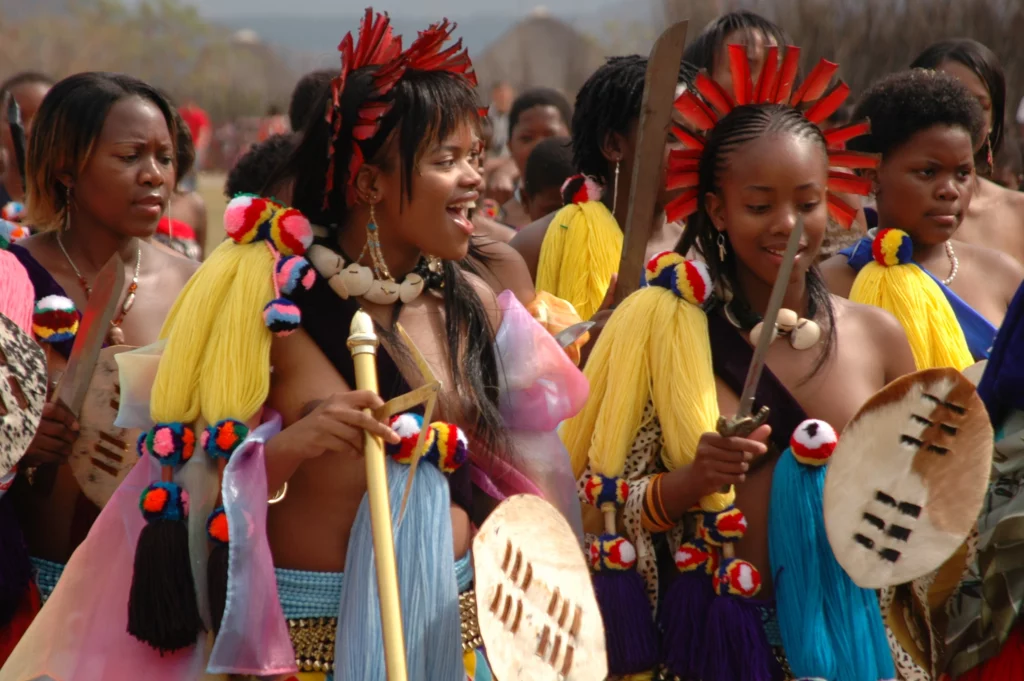
La meilleure tenue traditionnelle swazie offre un aperçu captivant du monde dynamique de la mode swazie, où chaque vêtement raconte une histoire d'héritage culturel et d'expression personnelle. Des insignes royaux LIHIYA et EMAHIYA à la mode africaine contemporaine avec une touche d'originalité, la tenue vestimentaire des mariages swazis est à la fois époustouflante et symbolique.
Robes traditionnelles
Le lessive, un vêtement traditionnel swazi porté par les femmes, est un excellent exemple de ce riche patrimoine. Cette tenue complexe se compose d'un long, jupe fluide et un haut assorti, souvent fabriqué à partir de tissus aux couleurs vives ornés de perles et de broderies élaborées. Les motifs du LIHIYA ne sont pas seulement décoratifs; ils sont imprégnés de symbolisme culturel, représentant divers aspects de la vie et des traditions swazies.
Le EMAHIYA, un autre vêtement traditionnel, est porté par les hommes et est tout aussi frappant. Cette tenue comporte un tissu enveloppé, généralement dans des motifs et des couleurs audacieux, fixé autour de la taille. L'EMAHIYA est complétée par une ceinture en perles et des accessoires qui rehaussent son élégance. Les motifs géométriques audacieux et les couleurs vives de l'EMAHIYA témoignent de l'art et du savoir-faire swazis..
Les vêtements LIHIYA et EMAHIYA sont souvent ornés d'accessoires traditionnels tels que des colliers de perles., boucles d'oreilles, et des bandeaux. Ces accessoires sont méticuleusement fabriqués, incorporant souvent des modèles spécifiques qui signifient le statut social et les liens familiaux. La tenue traditionnelle swazie moderne mélange harmonieusement ces éléments séculaires avec les tendances de la mode contemporaine., créer un équilibre harmonieux entre tradition et modernité.
Rebondissements modernes
La mode africaine contemporaine mélange souvent des éléments traditionnels avec des tendances modernes, résultant en des vêtements innovants et élégants qui honorent toujours les racines culturelles. Par exemple, les épouses swazies modernes pourraient opter pour un élégant, robe sur mesure avec des accents de perles traditionnels, fusionnant l'élégance de la mode contemporaine avec la richesse de la tradition swazie.
En outre, l'influence des cultures voisines, comme le Tsonga, joue également un rôle dans la tenue de mariage swazi moderne. Robes traditionnelles Tsonga, connus pour leurs couleurs vibrantes et leurs perles complexes, sont de plus en plus intégrés aux mariages swazis. Ces robes présentent des imprimés audacieux et des designs élaborés qui rehaussent l'atmosphère de fête.. Une robe inspirée de Tsonga peut inclure un corsage ajusté avec une jupe évasée, orné de perles et de broderies colorées qui reflètent à la fois l'héritage culturel et les sensibilités modernes.
Cérémonies de mariage swazi
Les cérémonies de mariage swazies sont un mélange vibrant de tradition, culture, and community celebration. Chaque cérémonie est riche de rituels et de pratiques transmises de génération en génération., faire de l'événement une occasion profondément significative et joyeuse.
Fêtes et cérémonies
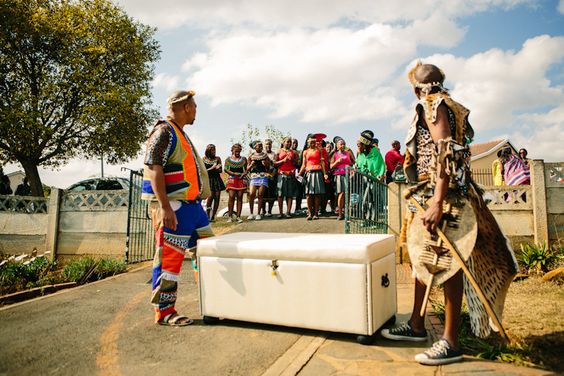
Il y a deux fêtes traditionnelles populaires localement: le festival Incwala et la cérémonie Umembeso.
Festival d'Inwala
L'une des cérémonies les plus importantes de Culture swazie c'est le festival Incwala, lequel, bien que non exclusif aux mariages, joue un rôle crucial dans le calendrier culturel. L'Inwala, ou “Premiers fruits” cérémonie, est une célébration du roi et de la nation swazie. Cette fête, qui a généralement lieu en décembre ou janvier, implique plusieurs jours de rituels, danses, et la dégustation de la nouvelle récolte. Pour un mariage, participer ou s'aligner sur l'Incwala signifie le lien du couple avec leur héritage culturel et la bénédiction du roi et des ancêtres.
Le festival commence avec le « Petit Incwala,"où les jeunes hommes de la nation se rendent pour recueillir de l'eau sacrée et des plantes. Ceci est suivi de l'événement principal, où le roi mène des rituels qui incluent la consommation des prémices de la récolte, symbolisant le renouveau et la prospérité. Les mariages qui coïncident avec ce festival sont imprégnés de couches supplémentaires de signification culturelle et spirituelle., linking the personal union of marriage to the broader Swazi identity and communal blessings.
Cérémonie d'Ummesbo
La cérémonie Umembeso fait partie intégrante du processus de mariage traditionnel swazi.. Cette cérémonie implique le marié et sa famille présentant des cadeaux à la famille de la mariée., symbolisant le respect, gratitude, et la réunion des deux familles. Les cadeaux comprennent généralement des couvertures, vêtements, et du bétail, qui sont essentiels dans la culture swazie.
Pendant Umembeso, la famille du marié arrive au domicile de la mariée dans un cortège de célébration, souvent accompagné de chants et de danses. Les cadeaux sont ensuite présentés lors d'une cérémonie formelle et joyeuse, qui est marqué par des discours, bénédictions, et fête commune. Cet échange cimente non seulement la relation entre les deux familles mais met également en lumière les valeurs de générosité et d'unité qui sont au cœur des mariages swazis..
Musique et danse
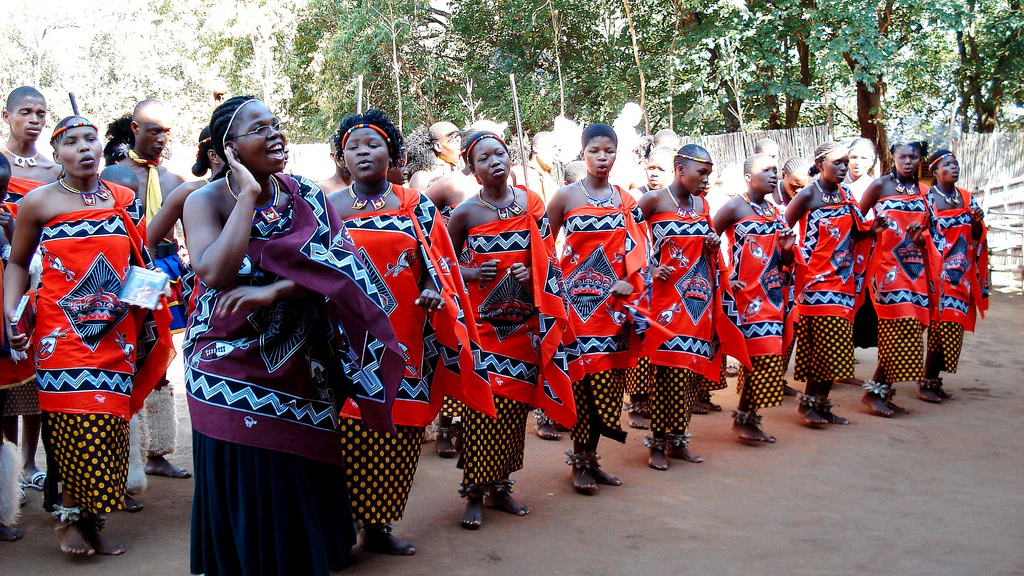
Ces spectacles de musique et de danse divertissent et constituent une expression vivante de la culture swazie., relier le couple et leurs invités à leur patrimoine. Chaque étape, battre, et cette note renforce les liens communautaires et les traditions partagées qui font des mariages swazis une expérience vraiment unique et joyeuse..
Musique traditionnelle
La musique traditionnelle est le cœur des cérémonies de mariage swazies, donner du rythme et de l'émotion aux célébrations. Instruments autochtones tels que le « Makweyane » (un instrument à archet traditionnel) et la batterie assure la bande sonore de l'événement. Les chansons incluent souvent des louanges pour le couple, bénédictions des ancêtres, et des chants de célébration qui encouragent la danse et la participation de tous les participants.
Les mélodies et les rythmes sont profondément liés aux récits culturels swazis, chaque chanson racontant une histoire ou transmettant un message. Le chant communautaire favorise un sentiment d'unité et de joie partagée, faire de la musique un élément indispensable des festivités du mariage.
Spectacles de danse
La danse est un autre élément dynamique des célébrations de mariage swazi, avec des performances à la fois énergiques et symboliques. La danse « Sibhaca », caractérisé par des piétinements puissants et des mouvements de jambes complexes, est une danse traditionnelle populaire exécutée lors des mariages. Les danseurs portent des vêtements traditionnels, y compris les jupes et les bracelets de cheville en perles, ajouter un spectacle visuel aux battements rythmiques des tambours.
Une autre danse remarquable est la « Umhlanga » ou Reed Dance., traditionnellement interprété par de jeunes filles. Alors que la cérémonie complète d'Umhlanga est un événement culturel plus vaste, des éléments de cette danse sont souvent incorporés aux célébrations de mariage pour honorer la mariée et mettre en valeur la beauté et la grâce des femmes swazies..
Quels grossistes pour les fêtes de mariage en Afrique du Sud puis-je choisir?
Lors de la planification d'un mariage swazi, choisir le bon fournisseur de fournitures de fête en Afrique du Sud peut faire toute la différence. Voici quelques-uns des meilleurs grossistes à considérer pour votre journée spéciale:
- Mariage Primo: Si vous souhaitez acheter des accessoires de fête en ligne en Afrique du Sud, Primo peut proposer tous les décors traditionnels swazis pour votre mariages, des fleurs, bannières, les tables, vaisselle, et tout ce qu'il faut en cas d'événement. Service personnalisé pris en charge!
- Décor de mariage sud-africain & Embaucher: Spécialisée dans la décoration de mariage intérieure et extérieure, ils offrent tout, des tables élégantes aux compositions florales vibrantes qui capturent l'essence des traditions swazies..
- Boutique de mariée de la reine africaine: Offrant un mélange de tenues swazies traditionnelles et modernes, cette boutique est parfaite pour trouver des robes de mariée et des accessoires uniques qui reflètent l'héritage culturel avec une touche contemporaine.
- Kwazulu Décor & Embaucher: This wholesaler provides a wide range of décor options, y compris l'artisanat fait à la main, centres de table en perles, et bougies swazies, garantir que votre lieu soit à la fois authentique et époustouflant.
- VIVA AFRICA Vêtements traditionnels: Axé sur la mode africaine traditionnelle, ils proposent une variété de Tsonga et d'autres robes traditionnelles qui peuvent ajouter une touche vibrante et élégante à votre tenue de mariage..
Conclusion
Le décor traditionnel swazi offre un aperçu captivant du riche patrimoine culturel et des traditions artistiques. Des couleurs vibrantes et des motifs complexes aux objets artisanaux uniques et aux tenues de cérémonie, chaque élément du décor de mariage swazi raconte une histoire d'importance culturelle et d'excellence artistique. Alors que les mariages swazis continuent d'évoluer, le mélange de tradition et de modernité garantit que ces célébrations restent intemporelles et pertinentes.